
Transformation-induced plasticity (TRIP) can strongly influence the mechanical behaviour of advanced steels. We investigate the dual role of the TRIP effect in ductility and fracture toughness, linking deformation mechanisms, phase transformation, strain localisation, and resistance to fracture.
Our work uses mechanical testing and microstructural characterisation to understand how retained austenite and transformation behaviour affect the balance between strength, ductility, and toughness in advanced steel systems.
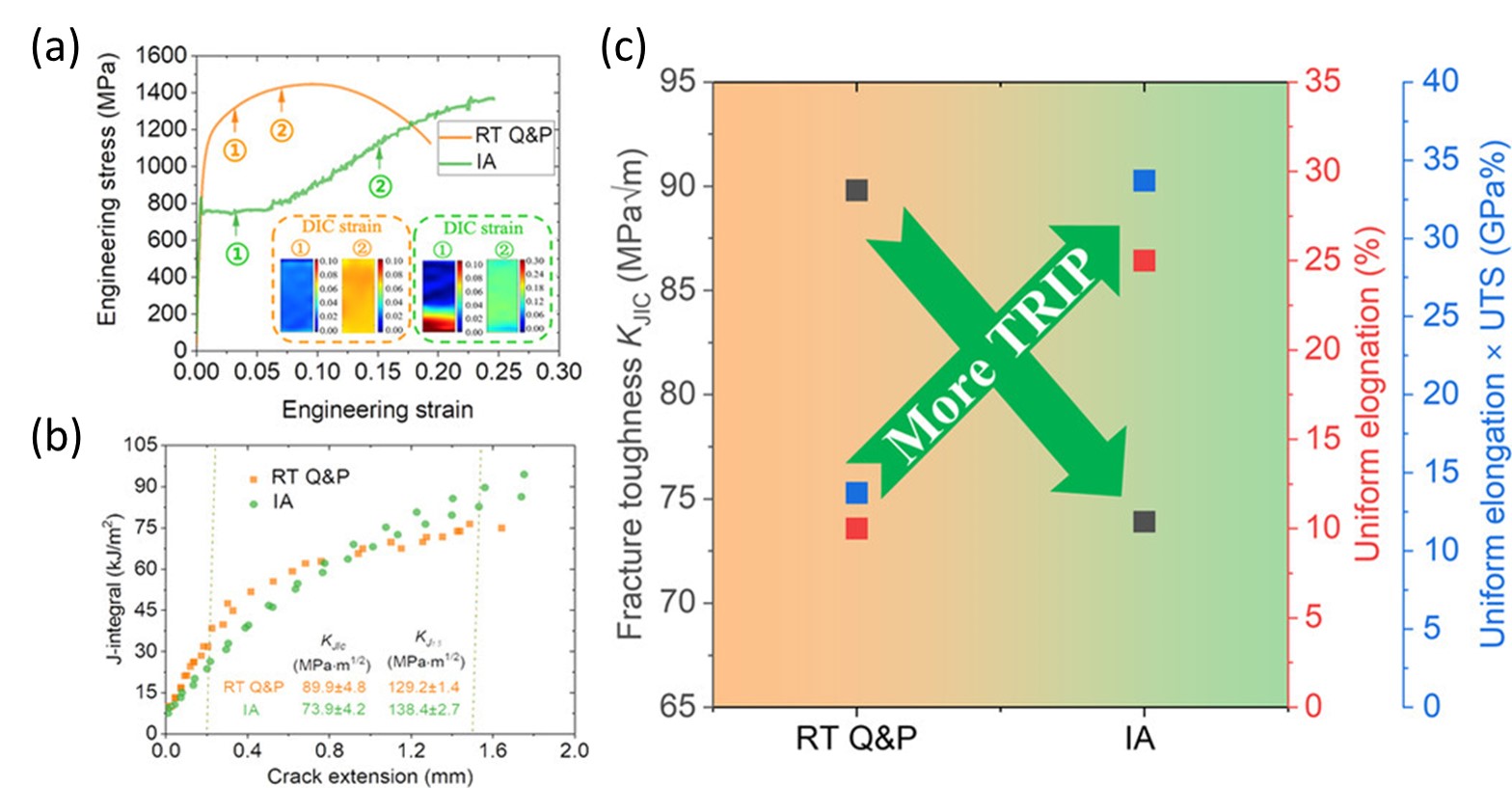
(a) Tensile stress-strain curves with DIC results of strain in the inset and (b) fracture toughness data of the IA and the RT Q&P steels; (c) schematic diagram of the tensile and fracture properties comparison.
We develop copper-containing stainless steels with anti-pathogen properties for frequently touched public surfaces. This research examines the role of copper-rich precipitates and alloy microstructure in producing antimicrobial performance while maintaining the engineering properties required for practical applications.
The work includes stainless-steel components produced by powder-metallurgy routes and assessment of the behaviour of pathogens on stainless-steel surfaces relative to other metallic materials.
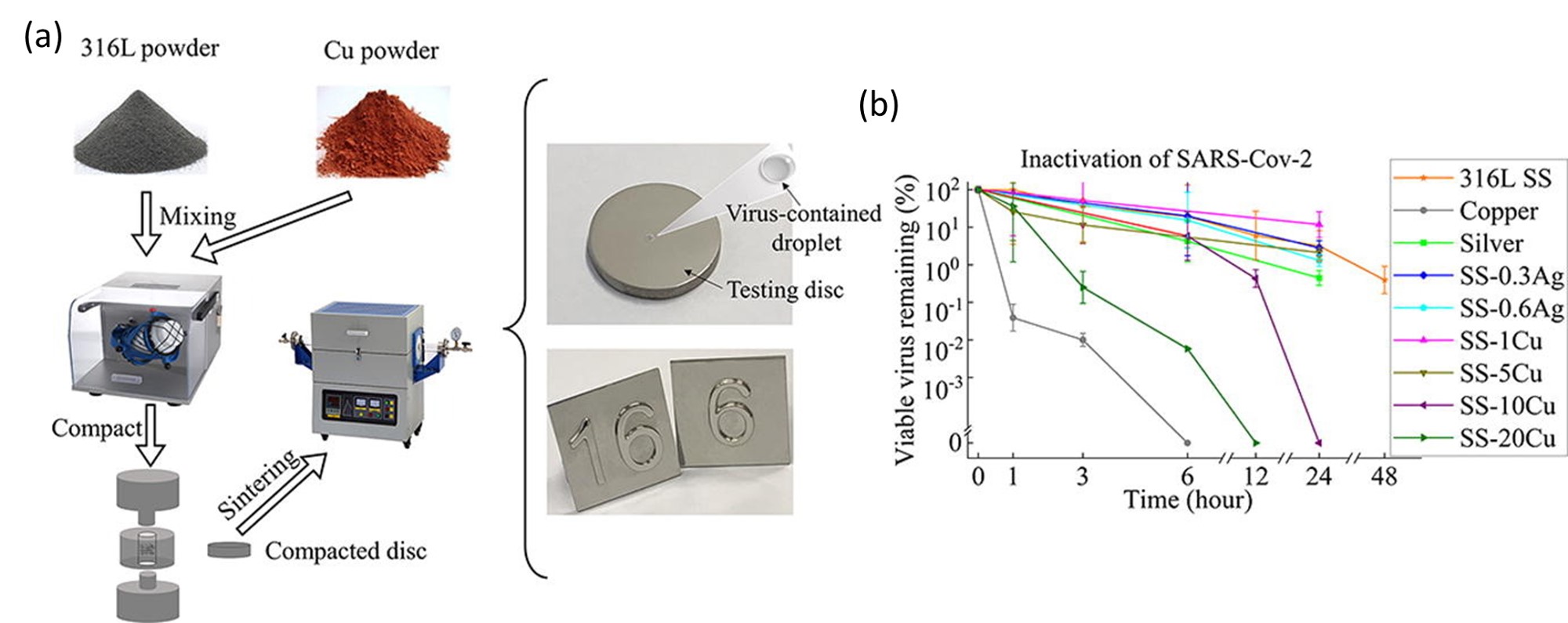
(a) Lift buttons made from the stainless steel SS-20Cu by PM technology. (b) Viability of the SARS-Cov-2 on the surfaces of SS-20Cu compared with other metals and alloys.
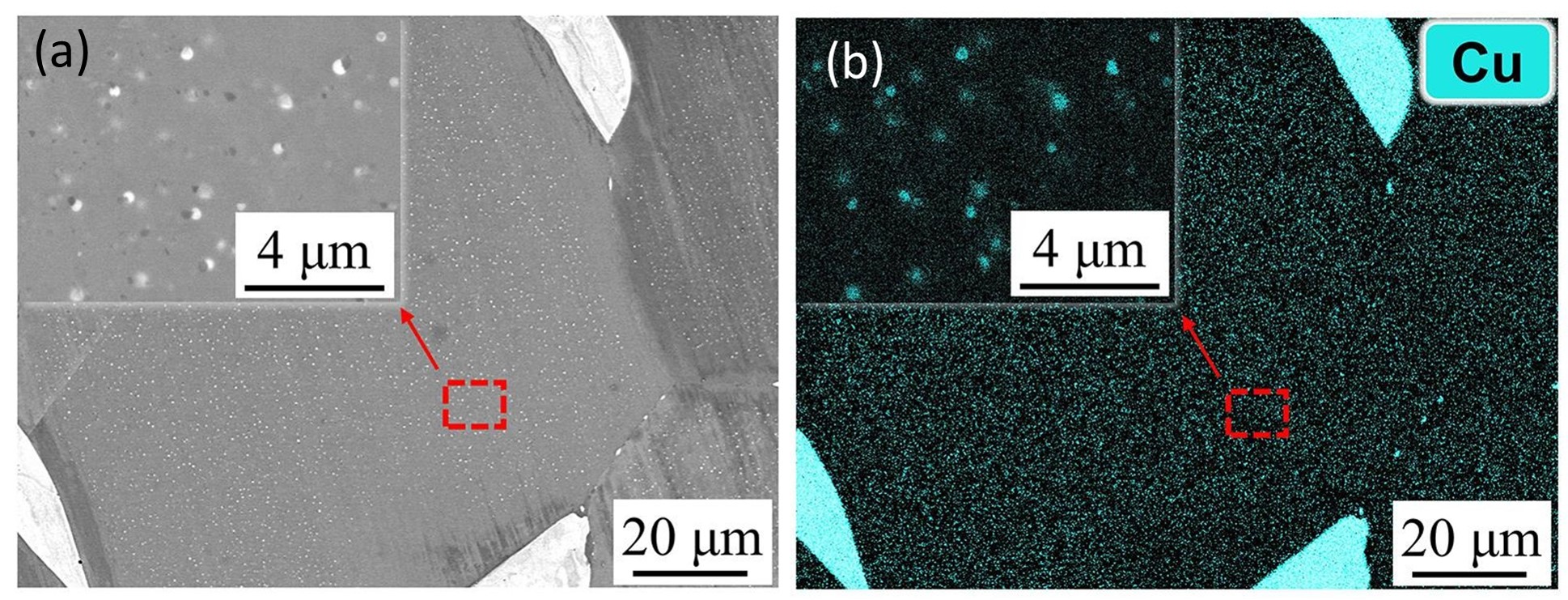
a) BSE image for Cu-rich precipitates of micron and submicron sizes within the stainless steel matrix; (b) the corresponding EDX mapping of Cu element.
We investigate sequential dual-passivation strategies to improve the corrosion resistance and electrochemical stability of stainless steels in demanding environments. The work examines the formation, composition, and stability of passive films under electrochemical conditions.
A particular application is the stability of catalyst substrates for oxygen-evolution reactions in chloride-containing electrolyte environments, where durable corrosion resistance is essential.
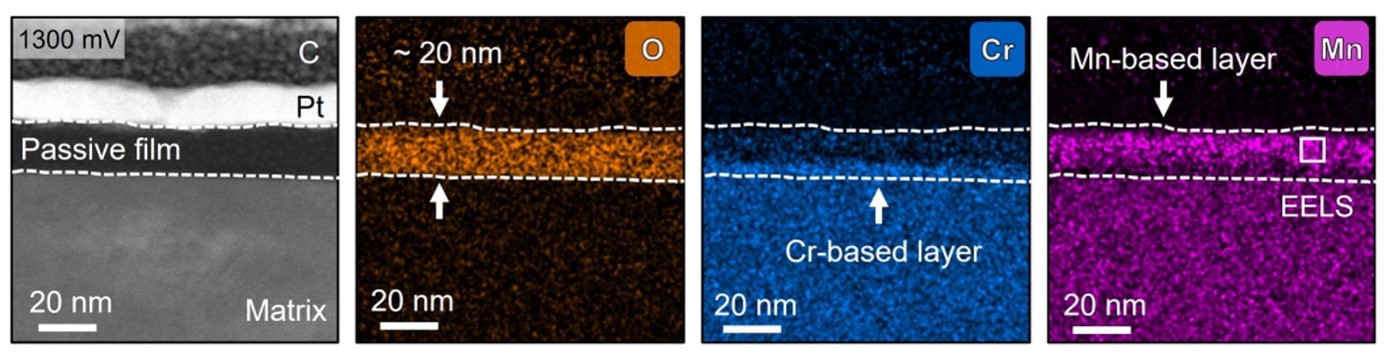
STEM-EDS identification of the Mn-SS passive film at 1300 mV(saturated calomel electrode, SCE).
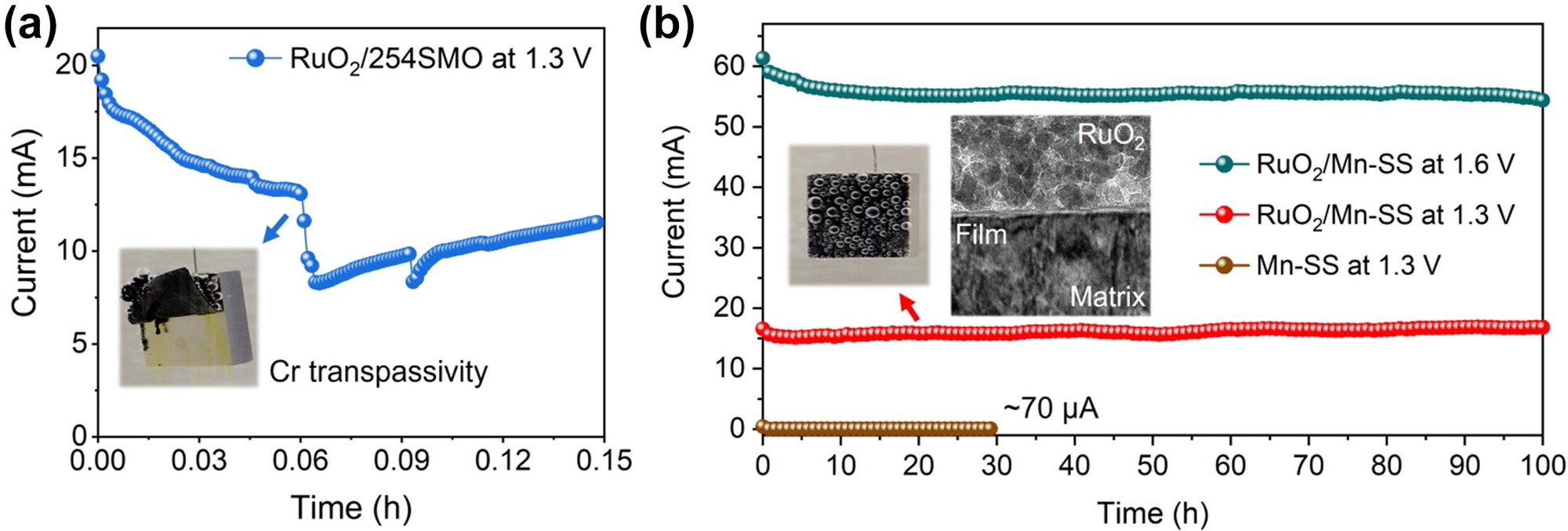
Oxygen evolution reaction (OER) stability of catalyst substrates in NaCl. (a) Potentiostatic stability measurements of the RuO2/254SMO electrode at 1300 mV(SCE); (b) Potentiostatic stability measurements of the RuO2/Mn-SS electrode at 1300 and 1600 mV(SCE). Inserted is the TEM image of the RuO2/Mn-SS interface at 1300 mV for one hour, showing the formation of a passive film.
We study the deformation behaviour of alloys under high strain rates, with emphasis on rate-sensitive mechanical response and the underlying microstructural mechanisms. This includes comparisons between carbon-free and carbon-containing steels, as well as rate-dependent deformation behaviour in magnesium alloys.
The research connects strain-rate sensitivity, carbon distribution, dislocation activity, and microstructural evolution to the performance of metallic materials under dynamic loading.
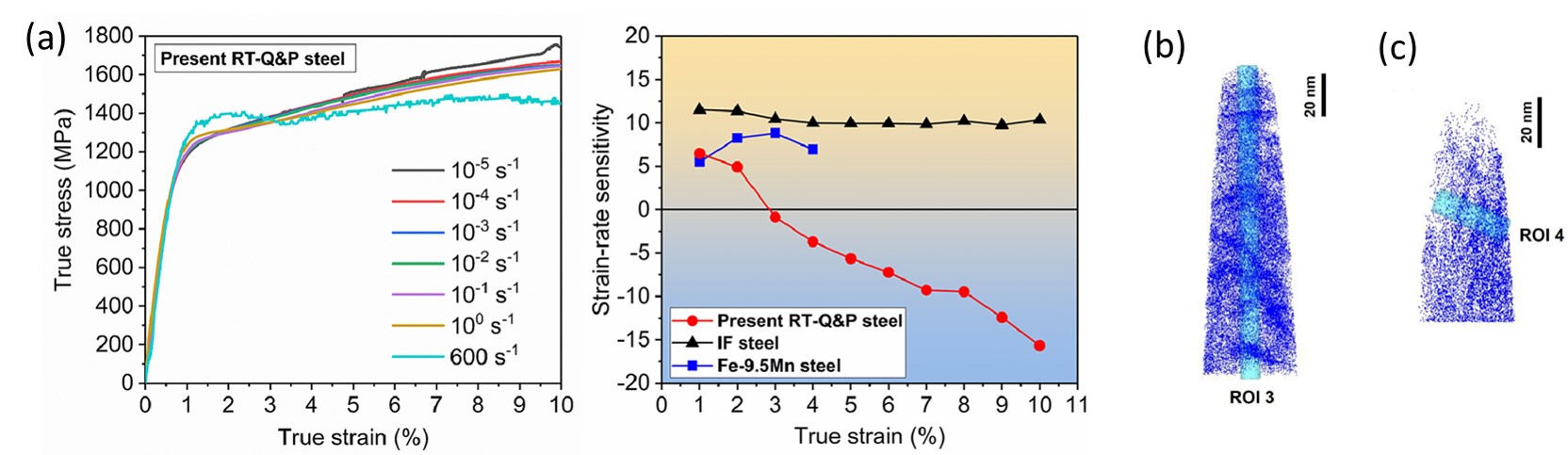
(a) Carbon-free steel (IF steel and Fe-9.5Mn steel) shows positive strain-rate sensitivity (SRS) throughout the deformation, while carbon-containing steel (present RT-QP steel) presents negative SRS after yielding; Carbon distribution of the present RT-Q&P steel after (b) low-strain-rate and (c) high-strain-rate deformation.
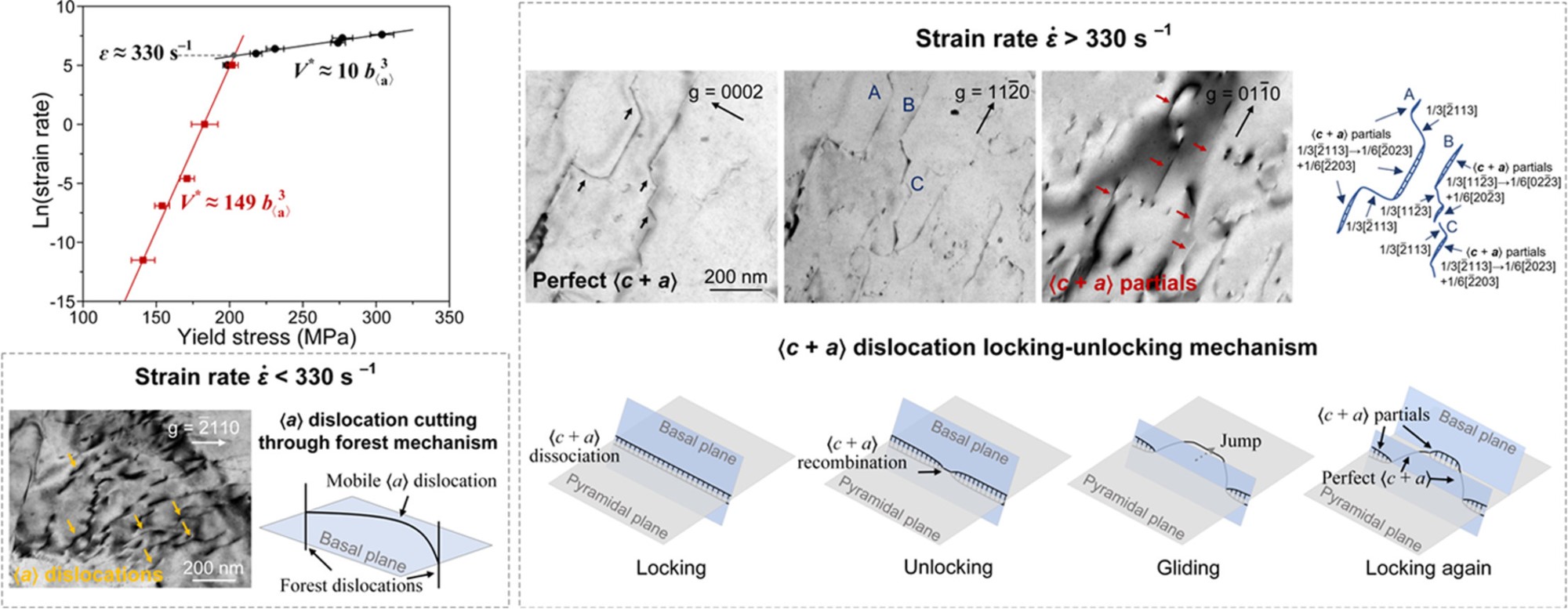
Rate-dependent transition of dislocation mechanisms in a magnesium alloy.
Hydrogen embrittlement can significantly reduce the reliability of high-strength steels. We investigate the relationship between hydrogen content, microstructure, strength, and susceptibility to hydrogen-assisted damage in press-hardened steel systems.
Our research supports the design and selection of high-strength metallic materials that maintain reliable mechanical performance in hydrogen-containing service environments.
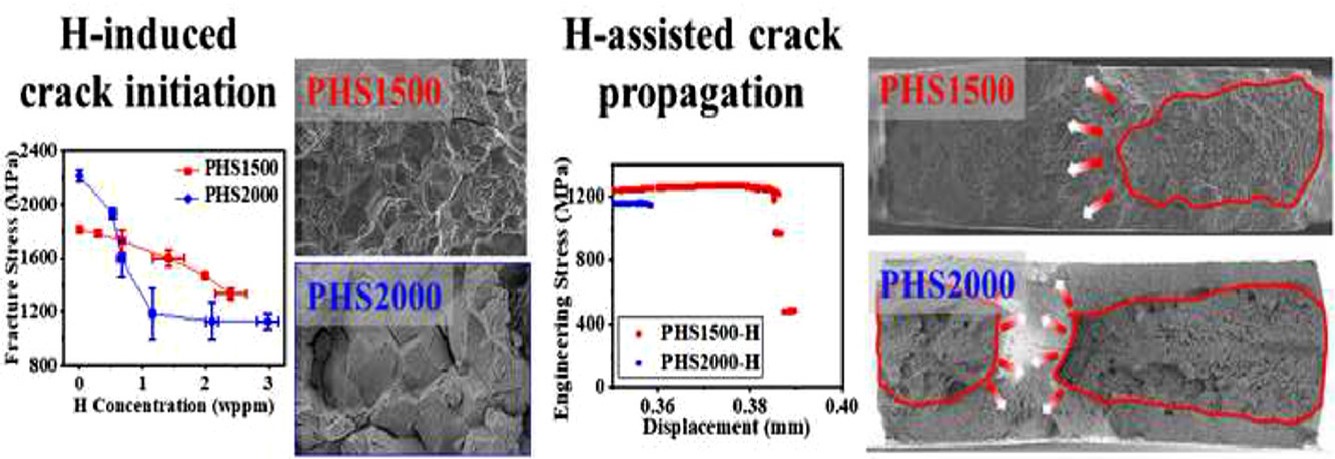
The resistance of PHS1500 and PHS2000 to hydrogen embrittlement. PHS2000 cannot offer any weight saving over PHS1500 when hydrogen content is higher than ∼0.5 wppm.
We develop materials and fabrication approaches that support cost-effective green-hydrogen production. This work integrates corrosion-resistant super stainless steels, advanced fabrication technologies, and low-cost catalytic systems.
The goal is to improve the durability, scalability, and economic feasibility of material systems used in green-hydrogen technologies.
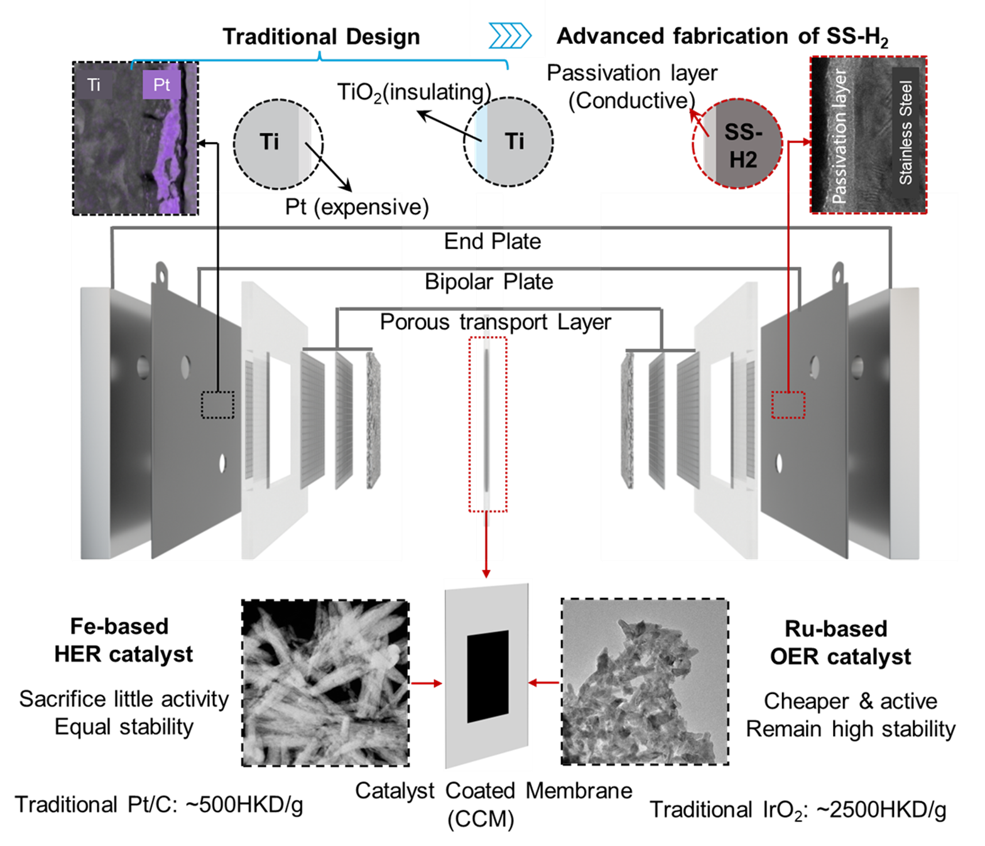
(a) Super stainless steels; (b) Advanced fabrication technology; (c) Low-cost catalytic systems.